

Imagine: you're a beginner or somewhat advanced golfer looking for new clubs. What should you pay attention to to avoid making a bad purchase? What suits your handicap, and how can you find out? The advice from a blustering salesperson in a regular golf showroom is usually very biased. They're eager to sell you products with the highest profit margins instead of anything that will actually make you wiser, so blindly trusting them doesn't seem wise. A little reading up on the subject can't hurt! Below, we'll give you 12 insider tips to equip you, as an amateur golfer, with insider knowledge that won't sell you lemons! With the knowledge below, you might even succeed online.
Tip 1. Starting to play golf? Don't buy old clubs!
Have you just started playing golf and are you looking for your first set? Don't make it too difficult for yourself. Many people consider buying a cheap (old) set of golf clubs on Marktplaats because they're not sure yet whether golf is actually fun. Our advice: don't do it! Sure... we're a commercial company, but to be able to use old golf clubs properly, you really need to be able to play golf. As an (as yet) inexperienced golfer, you don't hit the ball accurately enough to hit them, and hitting with old clubs can end up being a nightmare. It makes much more sense to buy a newer, perhaps not so expensive, beginner's golf set. These clubs are very forgiving and built to keep balls reasonably "inside" even if they're not hit accurately. That makes getting started with our beautiful sport much more enjoyable.


Golfclubs voor heren Golfclubs voor dames
Tip 2. Choose irons with a wider sole
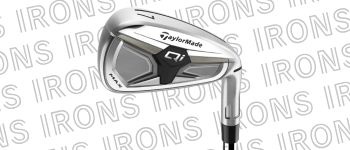
The sole is the bottom part of the iron where your iron rests on the ground. A wider sole means extra weight low in the clubhead, creating a lower center of gravity. This makes it considerably easier to give your shots a nice, high, predictable trajectory. A wide sole also reduces the chance of the club sticking in the ground if you accidentally hit the ball too far back. So choose irons with a slightly wider sole and avoid ones with a sole thinner than the width of an index finger.
Tip 3: Choose hybrids instead of long irons
Unfortunately, for the past few decades, golf manufacturers have been lowering the loft of their 3-iron and 4-iron clubs (and to a lesser extent, 5-iron clubs) every year. This is great for (advanced) golfers, as it results in lower, longer shots. For average golfers, this has made hitting the ball accurately with long irons much more difficult. To solve this problem, it's smart to swap your long irons one-for-one for hybrid clubs: 3-iron becomes hybrid 3... 4-iron becomes hybrid 4, and so on. This makes getting the ball rolling much easier.
Tip 4: Want to save? Buy last year's models!
Many brands update their product lines annually in light of new technological advancements. This means that last season's (new) clubs are sold at a discount. These clubs will be more than sufficient for many amateurs, but they often mean you can save hundreds of euros compared to buying the latest collections. Recommended... unless you want the very latest innovations and price is less important to you.
Tip 5: Choose the right shaft
When it comes to buying irons, you can choose between graphite and steel shafts. Graphite is lighter and can generate a higher swing speed and therefore more distance than a steel shaft. Graphite is ideal for women and senior golfers. Steel is cheaper and stronger than graphite. Steel is also heavier than graphite and generates more vibration on mishits, but this does give you, as a golfer, more feedback about how you're hitting the ball. It's a matter of preference... You can read more about this in our previously published blog post.
Tip 6: Make sure your shaft flex matches your swing
A shaft's flex refers to its ability to bend. When you initiate your swing, the shaft flexes, and when the club hits the ball, it needs to straighten again for best results. A shaft that's too flexible or too stiff will result in a loss of distance and/or direction. So, it's important to note that approximately 80% of male amateur golfers play with a regular flex shaft, but if you have a (very) fast swing, you might want to choose a stiff-flex shaft. Approximately 95% of female amateur golfers play with a ladies' flex shaft. Roughly speaking: if you, as a man, hit 90 to 145 meters with your 7-iron, then a regular flex shaft is recommended. Some brands use the term Uniflex for shafts that adapt their flexibility to your swing speed. This is also ideal for beginning golfers.
Tip 7. Club Fitting or Not
Club fitting isn't necessary for every golfer. More than 85% of new golf clubs are therefore delivered in a standard (unfitted) version. Manufacturers target this standard version for the "average golfer" with an average build, so that's often fine. Very tall or very short golfers can benefit from club fitting. A club fitter with a launch monitor is also recommended for advanced golfers who want to get the most out of their equipment to lower their handicap even slightly. For beginning and slightly advanced golfers with a "more or less average build," the focus will be more on hitting the ball accurately, which is already challenging enough in the beginning. Your position behind the ball isn't yet a fixed factor, so club fitting will hardly add any value. If you do get fitted and you do so with three different club fitters, you'll likely get three different results. Well, how valuable is it then? Read more about club fitting.
Tip 8. Beginner? Choose irons with an oversized clubhead
Are you a beginner looking for new irons? Then definitely choose an oversized clubhead design with a cavity back. Larger clubheads offer an improved sweet spot, resulting in more distance and forgiveness. As your game improves, you can opt for clubs with a smaller clubhead, sacrificing some forgiveness for more feel and playability.
Tip 9. Start with the essentials
When you play golf, you're allowed to use 14 clubs. As a beginner, it's not necessary to have every possible golf club in your bag. If you want to save money, consider starting with the basics: a putter, a sand wedge, a pitching wedge, a hybrid club, and a few irons. A driver is also an option, of course, but it can be quite difficult to handle at first. Getting used to just a few clubs will make it easier to get the ball in the air. This is helpful if you want to improve your game. Once you're past the beginner stage, you'll know for sure whether you enjoy golf enough to invest more in it. In that case, 14 clubs is definitely recommended, as you'll have the right club for "every" distance.
Tip 10: Choose clubs with a lot of loft as a beginner
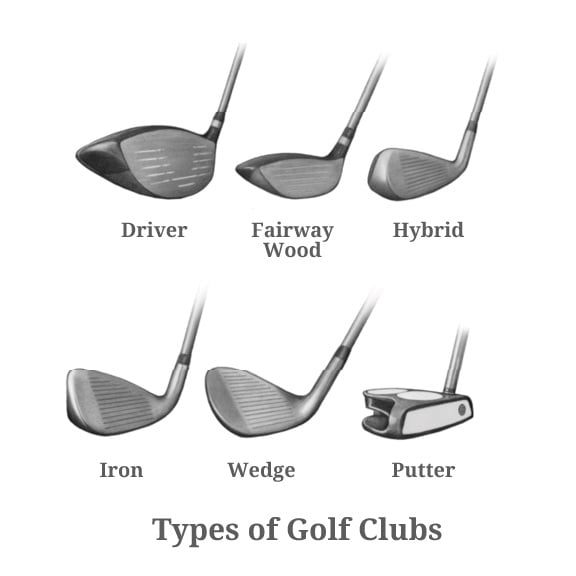 Higher-lofted clubs make it easier to get the ball airborne and reduce mishits. Striking the ball well isn't easy at first, and with lower-lofted clubs, it becomes even more challenging. Choose a driver with at least 10 degrees of loft, and fariway woods with at least 17 degrees of loft. Low-lofted clubs are more suitable for experienced players or beginners with experience in stick-and-ball sports like tennis or hockey.
Tip 11. Consider adjustment options when buying a driver
Most modern drivers offer adjustment options. It's certainly worthwhile to consider which adjustments will improve your game. Many drivers (but also fairway woods and hybrids these days) offer the ability to adjust the loft, and thus the launch angle of the ball, to suit your swing and preference. If this makes it easier to hit the ball accurately and/or achieve more distance, that's a bonus. Some clubs even offer the option of changing the weight distribution and balance in the club to adjust the ball flight, but this is often more interesting for more advanced golfers.
Selecting the Right Loft
Determining the right loft for your swing can be the most important decision when choosing your new driver. The most common misconception is that lower-lofted drivers deliver more distance and longer drives. Sometimes that's true, but for many golfers, the opposite is true. Yes... that's a shock! The vast majority of golfers play with drivers that are too low in loft to achieve their greatest potential distance. Below is a simple, indicative chart that can help you select the right loft for your driver.
Driver swing speed
80 km/h - loft 15-20 degrees
95 km/h - loft 14-18 degrees
110 km/h - loft 12-15 degrees
125 km/h - loft 11-14 degrees
145 km/h - loft 10-13 degrees
160 km/h - loft 9-12 degrees
175 km/h - loft 8-11 degrees
195 km/h - loft 7-10 degrees
Bekijk onze heren drivers
Bekijk onze dames drivers
Tip 12. Use quality golf balls
In today's modern golf game, the ball is crucial. Investing in good quality golf balls can pay off. A better, softer golf ball will produce low spin when using a driver and much higher spin when using a wedge. Most golfers benefit from a ball designed for distance, rather than spin. If you're still losing a lot of balls as a beginner, it might be too early to invest in better golf balls, but once your game has improved, it's time to invest more in buying high-quality golf balls. If new golf balls are too expensive, consider used lake balls. They can be perfectly fine too.
Finally...
Golf is a challenging sport. Even for those with a lot of talent or experience with other strokes, hitting the ball straight isn't guaranteed. We hope the information above will help you master the sport a little faster. While we have extensive knowledge of golf equipment, it's up to you to interpret it in your own way so it's useful to you. We wish you lots of fun with it! Golf is a wonderful sport... we keep saying that!